
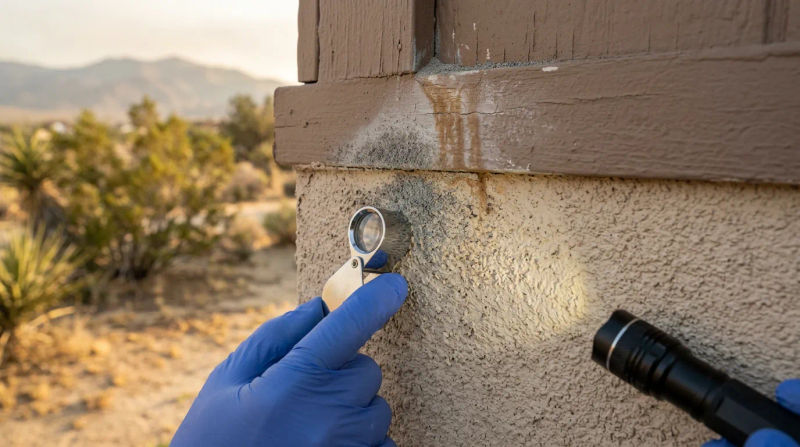
As a painting specialist who has worked on homes across Hesperia and the High Desert for over a decade, I’ve seen the unique challenges our environment poses. After a nearby wildfire, it’s common to see a fine layer of dust settle on every surface. Many homeowners see this as just another cleaning chore, but that gray film on your home’s exterior is more than just dirt. September marks the peak of our late fire season, and that wildfire ash can cause significant, long-term damage to your paint, especially with the first seasonal rains on the horizon. Understanding the signs of this damage is the first step in protecting your home’s value and appearance.
Common Signs and Symptoms
Recognizing the early signs of wildfire ash damage allows you to act before minor issues become major failures. Our technicians are trained to spot these specific symptoms during inspections. Here’s what you should look for on your home’s exterior:
- A Stubborn Gray or Yellow Haze: The most immediate sign is a dirty film that doesn’t seem to wash away with a simple hosing. This isn’t just dust; it’s a chemical residue that has begun to bond with your paint’s surface.
- Accelerated Paint Chalking: Run your hand over a section of siding. If it comes away with a heavy, powdery residue, you’re seeing paint chalking after ash fallout. While all paint oxidizes over time, the highly alkaline nature of ash rapidly breaks down the paint’s binders, causing it to fail prematurely.
- Dark Streaks and Staining: After morning dew or the first light rain, you might notice dark, vertical streaks running down your walls. This happens when moisture activates the ash, creating a caustic slurry that etches and permanently stains the paint as it drips.
- Loss of Sheen: The finish on your paint, especially satin or semi-gloss on trim and doors, may appear dull and lifeless. The alkaline compounds in the ash chemically etch the surface, removing its reflective quality and making it look flat and aged.
- Peeling or Flaking Near Ledges: Ash tends to accumulate on horizontal surfaces like window sills, fascia boards, and in the crevices of complex rooflines. Homes from the 1980s-2000s, common in neighborhoods like Spring Valley Lake, often feature Neo-eclectic designs with multiple gables and steep roofs. These architectural features create many pockets where ash can sit, trap moisture, and slowly eat away at the paint’s adhesion, leading to peeling.
- New or Worsening Efflorescence on Stucco: Stucco is the siding of choice for many Hesperia homes, but its porous nature can be a liability with ash. When ash sits on stucco, it traps moisture against the surface. This can pull mineral salts from within the stucco, leaving behind ugly, white, powdery stains known as efflorescence.
- A Gritty, Rough Texture: If your home’s siding feels like fine-grit sandpaper even after a thorough rinse, it’s a sign that ash particles have become embedded in the softened paint film. This not only affects the appearance but also creates a rough surface that attracts more dirt and grime.
What Causes This Problem
The damage isn't caused by the dust itself, but by its chemical composition. Wildfire ash is highly alkaline, carrying a high pH level similar to harsh chemical cleaners. When this dry ash combines with moisture - whether from rain, morning dew, or even high humidity - it forms an alkaline solution, much like lye.
This caustic mixture is the true culprit. It chemically attacks the binders in your exterior paint. These binders are the resinous components that hold the pigment together and make the paint film adhere to the surface. When the binders break down:
- The paint loses its flexibility and strength, leading to chalking and cracking.
- The surface becomes more porous, allowing moisture and contaminants to penetrate, which can cause blistering and peeling.
- The bond to the substrate is weakened, resulting in widespread paint failure.
This chemical reaction is especially aggressive on sun-beaten surfaces. In Hesperia, the intense sun on south- and west-facing walls already weakens paint over time through UV degradation. When you add a layer of ash on exterior paint Hesperia homes, that pre-weakened surface has very little defense against the chemical attack, leading to rapid deterioration.
When to Call a Professional
Deciding whether to tackle ash cleanup yourself or call for expert help depends on the severity and duration of the problem. A quick, light dusting might be a DIY job, but significant wildfire ash damage requires a professional approach.
For a very recent, light ashfall, you might try to rinse it yourself. The key is to know how to rinse ash off painted siding safely. Always use a standard garden hose with a spray nozzle, not a high-pressure washer. Start from the top of the wall and work your way down, letting gravity help you. Never spray upwards, as this can force water and caustic ash particles under the siding. A pressure washer is particularly dangerous here, as it can drive the sharp ash particles deep into the paint film, causing permanent damage.
However, we strongly recommend calling for a professional assessment in these situations:
- The ash has been sitting for more than a week. The longer it sits, the higher the chance of chemical bonding and staining, especially once it gets wet.
- Your home is two or more stories. Working on ladders while handling hoses and cleaning equipment is a significant safety risk. Our trained crews use standardized safety protocols and equipment to work efficiently and safely at height.
- You already see signs of staining, chalking, or peeling. At this point, simple cleaning is not enough. The paint is already compromised. A professional will need to assess if a specialized cleaning process is sufficient or if surface prep and repainting are required.
- You have textured siding like stucco. The texture of stucco makes it extremely difficult to remove all the ash particles with just a simple rinse. Our technicians use specific, pH-neutral cleaning agents and soft-washing techniques to gently lift the residue without damaging the stucco itself.
An experienced professional can accurately diagnose the extent of the damage and create a clear plan to mitigate it, whether it's through a deep cleaning process or a full surface restoration and repaint.
Conclusion
That dusty layer left behind by a wildfire is more than an inconvenience; it’s a chemical threat to your home’s protective paint coating. The combination of alkaline ash, UV exposure, and seasonal moisture creates a perfect storm for premature paint failure, staining, and chalking. By learning to identify the signs - from a stubborn haze to peeling paint - you can take proactive steps to protect your investment.
Waiting until the winter rains arrive can lock in stains and accelerate damage, leading to more costly repairs down the road. Addressing the issue during the dry, late fire season is the most effective strategy. Pay close attention to your home’s exterior, especially south- and west-facing walls and areas with complex rooflines where ash collects.
If you notice any of these signs, contact a local Painting professional for an inspection. An expert assessment can provide peace of mind and a clear path forward to keeping your home beautiful and protected.