
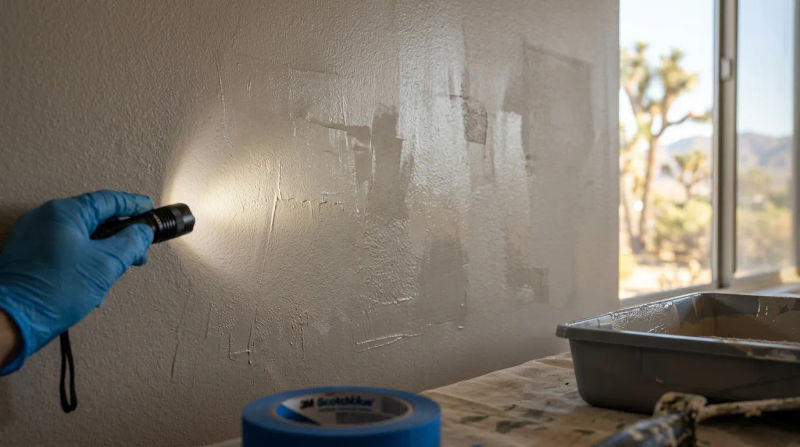
You’ve spent the weekend transforming a room, carefully taping edges and rolling on that perfect new color. You step back to admire your work, but as the bright Apple Valley sun streams through the window, your heart sinks. Instead of a smooth, uniform wall, you see streaks, faint lines, and patches of uneven shine. It’s a frustratingly common experience, especially with the intense daylight and dry air we have here in the high desert. Before you consider applying yet another coat, it’s important to understand what’s causing the problem. As a specialist who has focused on surface preparation for over a decade, I can tell you that the finish is only as good as the foundation beneath it.
September is the perfect time to tackle these indoor projects before the holiday hosting season begins. Understanding the root causes of uneven paint will help you achieve the flawless finish you're looking for, ensuring your home looks its best for guests.
Common Signs and Symptoms
When we talk about patchy interior paint, it can manifest in several ways. Identifying the specific symptom is the first step toward a proper diagnosis. Our technicians are trained to spot these subtle but significant issues during an initial assessment. Here’s what you should look for:
- Roller Marks: These are distinct lines or patterns, often called “tracks” or “holidays,” left behind by the edges of the paint roller. They can appear as parallel streaks across the entire wall.
- Lap Marks: These are darker, thicker-looking stripes that appear where you’ve overlapped a freshly painted section with one that has already started to dry. In our low-humidity climate, this happens much faster than people expect.
- Paint Flashing: This is one of the most common issues we see. It’s an inconsistency in the paint’s sheen, where some areas look dull or flat while others have the intended gloss. This is especially noticeable when viewing the wall from an angle.
- Poor Hide or Coverage: You might notice the old wall color subtly showing through the new coat, creating a blotchy or uneven appearance. The color just doesn’t look solid or rich.
- Picture Framing: This occurs when the edges of the wall, painted with a brush (a process called “cutting in”), appear darker or have a different texture than the central area painted with a roller.
- Streaky Wall Paint: This is a general term that can encompass several of the issues above, resulting in a finish that simply lacks uniformity and looks unprofessional.
What Causes This Problem
An uneven paint job is rarely due to a single mistake. More often, it’s a combination of factors related to preparation, materials, and technique. The large, open floor plans and expansive walls common in Apple Valley homes built in the 1990s and 2000s can make these flaws particularly obvious.
- Improper Surface Preparation: A clean, smooth, and uniform surface is non-negotiable. If you paint over dust, grime, or oils, the paint won’t adhere properly. Especially after a late fire season, a fine layer of soot can settle on interior walls, which must be washed off with a suitable cleaner. Likewise, painting over glossy old paint without first scuff-sanding it will lead to poor adhesion and an uneven finish.
- Skipping or Using the Wrong Primer: Primer serves two critical functions: it ensures the paint adheres properly, and it creates a uniform surface so the topcoat absorbs evenly. Painting directly over drywall repairs, stains, or a dark color without primer is a primary cause of paint flashing vs sheen issues. The porous drywall compound, or spackle, will soak up paint differently than the sealed drywall paper around it, creating dull spots. A quality primer neutralizes the entire surface.
- Low-Quality Paint or Tools: Bargain paint often contains fewer solids and lower-quality binders, which means it doesn’t cover as well and can result in patchy interior paint. Similarly, using a cheap, worn-out roller cover will not apply paint evenly, creating visible roller marks on walls. A good quality roller cover holds the right amount of paint and releases it smoothly for a uniform finish.
- Incorrect Application Technique: Professional painters follow a strict methodology to avoid imperfections. A common DIY mistake is not maintaining a “wet edge.” This means always rolling from a wet area into a dry area, and then back into the wet section. In Apple Valley's dry air, that wet edge disappears quickly. Applying too much pressure on the roller can also create thick lines, while not loading the roller with enough paint causes it to dry out and leave streaks.
- Challenging Environmental Conditions: The high-desert climate is a major factor. Low humidity and warm temperatures cause water-based latex paints to dry exceptionally fast. This drastically shortens the “open time” you have to work with the paint, making lap marks almost inevitable for an inexperienced painter. The bright, direct sunlight also exposes every tiny flaw that might go unnoticed in a region with more overcast days.
- Insufficient Number of Coats: Sometimes, the issue is as simple as needing a second coat. This is almost always the case when painting over a dark color with a lighter one or when using very deep, rich colors like reds or dark blues, which often require a tinted primer and multiple topcoats for full, even coverage.
When to Call a Professional
Deciding whether to fix the issue yourself or call for help depends on the scale of the problem and your comfort level.
You might be able to tackle a repaint yourself if:
- The issue is confined to a small, single wall.
- You are confident you can properly prepare the surface (clean, sand, and prime).
- You are willing to invest in high-quality paint and the right tools for the job.
However, it's time to contact an experienced professional for streaky wall paint in Apple Valley when:
- The problem is widespread across large walls or multiple rooms. The expansive great rooms in many 1990s-2000s era homes require a systematic approach to maintain a wet edge across their entire surface.
- You have significant drywall damage, water stains, or other surface issues that need expert repair before painting can even begin.
- The job involves high ceilings, stairwells, or other areas that are difficult and dangerous to reach without proper equipment.
- You want a guaranteed, durable, and flawless finish. Our trained crews use standardized workflows and professional-grade equipment specifically designed to manage the fast-drying conditions of our climate, ensuring a perfectly uniform result every time.
Conclusion
Achieving a smooth, professional-looking paint job is about more than just applying color to a wall. It’s a technical process where preparation, materials, and technique are paramount. The causes of patchy and streaky paint - from improper prep to the challenges of our dry desert air - can be frustrating to diagnose and correct on your own.
Don’t let an uneven paint job detract from the beauty of your home. Addressing the root cause is far more effective than simply applying another coat over the problem. By taking the right steps, you can ensure your walls have the clean, consistent, and lasting finish they deserve.
If you notice any of these signs, contact a local Painting professional for an inspection.